




What are the licence requirements for renting a truck in Australia?
In Australia, you can rent and drive a moving truck on a standard C-Class car licence.
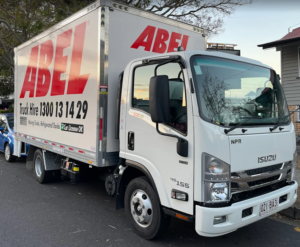
Renting a truck in Australia is simple. Your standard C-Class driver’s licence lets you rent and drive any vehicle with up to a 4.5-tonne Gross Vehicle Mass (GVM). If you’re not sure what that means, take a look at our 3.5-tonne Pantech trucks and moving trucks. These trucks, which offer a generous 20m3 of cargo space, can be driven on a standard car licence.
Are There Any Other Requirements for Renting a Truck?
Technically no, however, most rental companies, including us, charge a “young driver” surcharge if drivers are aged 25 and under. Anyone aged 25 and over can rent moving trucks from most major companies without paying these surcharges. If you’d like to read more, you can find our full rental agreement here (don’t worry, it’s only one page!)
What About Larger Trucks?
As mentioned, in Australia, the licence you need to rent a truck depends entirely on the vehicle’s Gross Vehicle Mass (GVM), i.e. the maximum weight of the truck including its load, fuel, and passengers.
Truck Rental Licence Classes
While a standard car licence covers many moving needs, larger vehicles require a heavy vehicle licence.
- Standard Car Licence (Class C): Allows you to drive vehicles with a GVM up to 4.5 tonnes. This typically includes:
- Vans and utes.
- 3-tonne Pantech trucks (often used for moving a 2-3 bedroom home).
- 4.2m moving vans (note that these may sound larger than Pantech trucks, but they actually have less cargo space).
- Light Rigid (LR): Required for vehicles between 4.5 and 8 tonnes GVM (e.g., small buses or medium-sized trucks).
- Medium Rigid (MR): Required for 2-axle vehicles over 8 tonnes GVM. This is common for larger removal trucks (e.g., 6.4m to 7.3m vans).
- Heavy Rigid (HR): Required for vehicles with 3 or more axles and a GVM over 8 tonnes.